


A recap of LegalOps.com’s RLLB 2026, September 8–11 at the Fontainebleau Las Vegas.
Running Legal Like a Business 2026 brought legal operations leaders to Las Vegas from September 8 to 11, and one expectation ran through nearly every session. Legal departments now have to show evidence for their decisions, from the return on an AI tool to the reasoning behind a law firm’s rate increase. Our team spent the week on the floor.
What our team heard between sessions
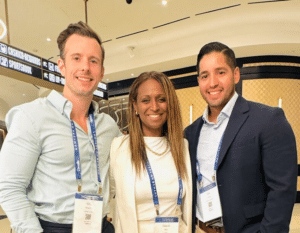
Priori’s Chief Commercial Officer, Matt Wheatley, shared a few key takeaways post-conference.
- On AI, the focus continues to shift from picking tools to understanding how it should change workflows, processes, and behaviors. Early on, it was enough to say that your team uses AI. Now, they need to show ROI.
- CLOs aren’t the bottleneck. Most teams Matt talked to said their CLO is all-in on technology. Getting group heads and the rest of the department there is the harder part, and plenty of teams still haven’t decided whether to use a carrot or a stick.
- Legal ops are weighing their options. With the momentum in the market, anyone who feels their organization isn’t capitalizing is looking hard at vendor, firm, and entrepreneurial roles. Sorting through what’s possible is intense and high risk, and the worry is that the window won’t stay open.
His last point was that in these unprecedented times, nobody has a clean blueprint for this moment, which is exactly why getting in a room with peers was worth the trip.
At our booth
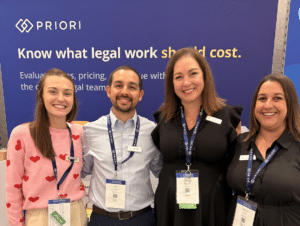
We asked one question: Do you know what legal work should cost?
It landed, because it’s the same question running under many sessions on the agenda. Most legal departments already have sourcing policies. Spend thresholds that should trigger a competitive bid, preferred-panel requirements, sign-off levels by matter size. They live in a memo nobody opens in the moment, while work goes to the same firm out of habit and the spend history sits in eBilling untouched until budget season.
That’s the gap we came to talk about. Priori is system-agnostic and connects to what you already run, so your own matter and eBilling data tell you what work should cost before a quote arrives. Your rules of engagement are built into the workflow, so the right process runs every time, whether that’s routing directly, requiring approval, or running the RFP based on your governance rules. The call ends up defensible to finance and legal leadership.
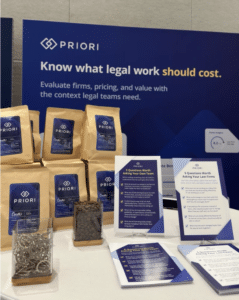
Along with passing out Priori-branded whole bean coffee and a pile of stuffed unicorns, we handed out two sets of conversation cards:
5 Questions Worth Asking Your Law Firms
Starting the conversations about how work gets done, what it costs, and where value is created.
- What work are we sending you today that you think we should be doing differently, or not sending you at all?
- What could change on the client-side that would give you more room to experiment with how the work gets done?
- If we paid you for outcomes instead of hours, what would actually have to change about how you staff and run this work?
- What are you doing differently because of AI that we, as the client, should actually be able to notice?
- Where has the work changed faster than the way we work together?
5 Questions Worth Asking Your Own Team
Before adding something new, we need to understand how the work gets done today.
- What do we say we want our people to do that our incentives, structures, or expectations make harder for them to actually do?
- What are we still piloting because we need to learn more, and what are we piloting because we’re not ready to commit?
- If a firm found a way to do our work significantly faster, would our current relationship reward them for telling us?
- Where do our pricing models, billing guidelines, or expectations unintentionally reward the behaviors we’re asking our firms to change?
- What are we tolerating today simply because changing it feels harder than living with it?
A few guides flew off our shelves, all free to download:
Missed us in Vegas? Let’s set up time.